
Two-thirds of India's 160 airports, approximately 120, have very low utilisation rates, with only 40 operating at 70-80 per cent capacity.

Punjab's Finance, Excise and Taxation Minister Harpal Singh Cheema announced the unearthing of a Rs 429.30 crore GST fraud, leading to an FIR in Ludhiana. The investigation, initiated after intercepting a vehicle on September 30, revealed a syndicate of 62 interconnected firms across multiple states using non-genuine documents to evade taxes.

'Once this entire AI and tech driven euphoria in the Western markets sees a correction there will be a re-evaluation of the Indian equity market and inflows will resume.'
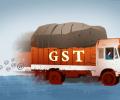
India's Goods and Services Tax (GST) collections soared by 23 per cent year-on-year to over Rs 2.31 lakh crore in October, marking the second-highest monthly mop-up ever, primarily driven by robust festive buying and strong domestic demand.

Indian benchmark stock indices, Sensex and Nifty, rallied significantly, with Sensex jumping over 1,500 points and Nifty reaching a nearly three-week high, driven by strong buying in banking, IT, and Reliance Industries stocks, alongside easing crude oil prices.

The Buddh International Circuit (BIC) recently hosted FIA-level racing for the first time in 13 years, sparking renewed discussions about a potential Formula 1 return to India. While organisers suggest 30-40% of the track needs revamping, drivers who competed praised its condition. The government is also exploring the feasibility, but significant financial investment and tax clarity are crucial for F1's comeback.

Despite recent foreign portfolio outflows, India's long-term investment prospects remain strong, but the return of capital hinges on global financial conditions, relative valuations, and the country's ability to attract sustained foreign investment, according to foreign bankers at the Business Standard BFSI Insight Summit.

The Kerala Legislative Assembly has passed a motion urging the central government to completely withdraw the proposed Merchant Discount Rate (MDR) on UPI transactions exceeding Rs 2,000. Chief Minister V D Satheesan and CPI MLA K Rajan highlighted concerns that the MDR would increase business costs, harm small businesses, and reduce the appeal of digital payments, while the BJP argued it would not affect general public or small merchants.

Reigning world champion Lando Norris has expressed a strong desire to race in India, acknowledging the country's massive Formula 1 fan base. This comes as the Indian government and Adani Group are exploring options to bring F1 back to the Buddh Circuit, despite significant financial and logistical hurdles. Norris, who has a close friend in Indian driver Jehan Daruvala, believes racing in India would be great for the sport.

Finance Minister Nirmala Sitharaman announced that the Goods and Services Tax (GST) Council's October 7 meeting will focus on 'GST 2.0' process reforms, including e-invoicing and input tax credit rules, while also addressing complex issues surrounding the taxation of the digital economy and cryptocurrency.

Alpine managing director Steve Nielsen, a veteran of Formula 1 since 1985, shares insights into his four-decade career, the sport's evolution from a niche interest to a global powerhouse, and the roles of Bernie Ecclestone and Liberty Media in its growth. He also discusses the potential return of the Indian Grand Prix, highlighting India's significant F1 fanbase.

The GST Council, chaired by Finance Minister Nirmala Sitharaman, has begun deliberations on significant reforms, including decriminalising nine offences, softening provisions for 24, and raising the threshold for criminal prosecution to Rs 5 crore. The proposed changes also include scrapping the arrest powers of GST officers and introducing an 'invoice matching system' to combat fake input tax credit claims, aiming for a trust-based taxation approach and enhanced ease of doing business.

India's Sports Minister Mansukh Mandaviya has announced the formation of a 10-member Task Force, chaired by Niti Aayog's Yugal Kishore Joshi, to assess the feasibility and challenges of reviving Formula 1 in the country. The committee aims to develop a roadmap for India to host a Grand Prix by 2028, focusing on sustainable growth, policy interventions, and addressing past issues like taxation. The Adani group, owners of the Buddh International Circuit, will also be involved.
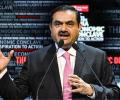
Pranav Adani's visit to the Singapore Grand Prix has intensified speculation about Formula 1's return to India. The Adani Group, which owns the Buddh International Circuit, is actively pursuing the revival of the Indian Grand Prix, with support from the Indian government. However, significant financial and logistical challenges, including tax clarity and substantial upgrade costs, must be overcome amidst increasing global competition for hosting races.

World champion Lando Norris says he would love to race in India as the government pushes to bring Formula 1 back to the country after a 13-year absence.

Sports Minister Mansukh Mandaviya has announced the formation of a 10-member Task Force, chaired by Yugal Kishore Joshi, to explore the revival of Formula 1 in India. The committee will assess challenges, identify policy interventions, and develop a roadmap to potentially host a race by 2028, addressing issues that led to its discontinuation after 2013.

India's GST Council has approved changes allowing small online sellers to register in states without physical premises by using an e-commerce operator's warehouse as their principal place of business, aiming to boost national sales for small businesses.

India's Next-Gen GST reforms are proving instrumental in driving robust economic growth, simplifying tax compliance, and fostering a more inclusive business environment across the nation, aligning with the vision of a 'Viksit Bharat', writes Finance Minister Nirmala Sitharaman.
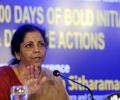
Finance Minister Nirmala Sitharaman has called for enhanced accountability and safeguards for artificial intelligence, particularly as it integrates into critical sectors like finance. Speaking at the Global Fintech Fest, she highlighted the dual nature of AI, capable of accelerating transactions but also amplifying fraud and cyberattacks. Sitharaman stressed the need for human and institutional responsibility in AI-driven decisions, urging regulators and companies to scrutinise high-risk AI applications. She also proposed a federated industry platform for Indian tech companies to navigate international regulations and ensure tax compliance globally.

The Congress party has criticised the government's recent notification regarding UPI transactions, alleging it paves the way for users to be charged fees, particularly for transactions above Rs 2,000. The party claims the government lacks transparency and questions if the move is to benefit American firms. The government, however, states that charges are necessary for the system's sustainability and infrastructure upgrades, with the Finance Minister clarifying that Merchant Discount Rate (MDR) applies to merchants, not customers.

Congress leader Rahul Gandhi has accused the Modi government of quietly paving the way for imposing fees on UPI transactions, alleging it's a surrender to American pressure. The government's recent notification exempts charges only up to Rs 2,000, sparking concerns that higher value transactions and eventually all UPI payments could incur fees. Finance Minister Nirmala Sitharaman, however, clarified that Merchant Discount Rate (MDR) applies to merchants, not customers, and supports digital infrastructure.

India's student housing shortage is widening, but high land costs, weak rental yields and regulatory hurdles are keeping organised developers away.
Finance Minister Nirmala Sitharaman clarified that the Merchant Discount Rate (MDR) on digital transactions applies to merchants, not customers, and aims to support banks and fintech in infrastructure investment. She countered Congress leader Jairam Ramesh's claims, stating that a committee will decide on MDR only after Parliament passes the Taxation and Other Laws (Amendment) Bill, 2026, a process currently stalled by parliamentary disruptions.

JSW Group and China's SAIC Motor are in discussions for the next round of capital support for JSW MG Motor India, aiming to expand manufacturing capacity beyond 220,000 units annually to an ambitious one million vehicles and broaden its new-energy vehicle (NEV) portfolio.

The Congress party has accused the Indian government of imposing new charges on UPI transactions due to pressure from the United States, specifically to benefit American card companies. The opposition party demanded the withdrawal of the decision, calling it "anti-national" and alleging it fills the coffers of US firms while burdening Indian citizens. The government, however, clarified that the Merchant Discount Rate (MDR) charges apply only to commercial transactions above Rs 2,000 and are not levied on consumers, a stance supported by the BJP which accused Congress of spreading "fake news".

The Congress party has criticised the government's new 0.4% charge on UPI transactions above Rs 2,000 for merchants, terming it a "Modi tax". Opposition leaders, including Rahul Gandhi and Mallikarjun Kharge, allege that this move will ultimately burden consumers through price hikes and accuse the government of succumbing to American pressure to dilute India's zero-MDR policy. The government states the charge will support banks and fintechs.
The Congress party has criticised the Modi government over a notification regarding UPI transactions, alleging it paves the way for imposing fees, especially on transactions above Rs 2,000. Rahul Gandhi claimed the government is surrendering to American pressure, while Mallikarjun Kharge highlighted the potential burden on common citizens amidst inflation. The government's notification prohibits charges on UPI transactions up to Rs 2,000 but remains silent on higher amounts, sparking fears of a "Digital Payments Tax."

'Ultimately, banks are a channel for people to get some long-term return, and this means banks need to adjust their asset-liability mismatch.' 'Customers also need long-term deposits, say those of three-five years. How would they get them if returns on those deposits do not climb?' 'Otherwise, on fixed deposits, a senior citizen doesn't get anything.'

The National Payments Corporation of India (NPCI) stated that the Merchant Discount Rate (MDR) "is distributed only amongst the UPI ecosystem, to further invest into infrastructure resilience, innovation, cybersecurity (protecting the UPI infrastructure with banks and non-banks) and customer service."

The government is introducing a 0.4% Merchant Discount Rate (MDR) on UPI person-to-merchant payments above Rs 2,000, effective October 15. This move ends the zero-MDR regime, aiming to fund UPI infrastructure and sustainability, as the previous government subsidy was insufficient to cover operational costs. Payments between individuals and most everyday merchant transactions will remain free.

'Since the category has a limited track record, assess the fund manager's experience across equity and debt market cycles rather than relying only on past returns.'

The Lok Sabha has passed a Bill to amend the Payment and Settlement Systems Act, 2007, authorising the government to permit banks and service providers to levy charges on UPI and other electronic payment modes. This move aims to create a sustainable revenue model for the digital payments ecosystem, shifting from the current exemption of UPI transactions from such charges.

Making UPI payments fee-based for some transactions could enhance mental reservations against digital payments -- which have largely been overcome -- once more. Do we want to regress?, asks R Jagannthan.

Tax treatment depends on the activity and manner of earning income.
India's government is working to resolve tax and regulatory hurdles to bring Formula One back to the Buddh International Circuit on the outskirts of New Delhi in 2028, more than a decade after the race was dropped.

'This government is in the very bad habit of doing so again and again. It has done so many times.'

Indian crypto exchanges and companies have expressed strong support for the Central Board of Direct Taxes' (CBDT) new Crypto Asset Reporting Framework (CARF), which mandates reporting and due-diligence obligations for crypto service providers on all transactions starting 2026.

The Indian government has clarified that consumers will not be charged for UPI transactions, and most merchant transactions will also remain free. This comes amidst speculation following an amendment to the Payment and Settlement Systems Act, 2007. Any future merchant discount rate (MDR) would be nominal, threshold-based, and aimed at ensuring UPI's long-term sustainability and infrastructure development.

As NSRCEL enters its next phase, the incubator plans to focus on AI, deep technology and global partnerships as it looks to expand its reach.

The CPI(M) has strongly opposed the Union government's proposal to levy charges on UPI transactions, calling it a "breach of public trust" and demanding the immediate withdrawal of the legislation. The party highlighted that the government had previously promoted UPI as a free public utility, encouraging widespread adoption, and now seeks to monetise this infrastructure. They also linked this move to a broader trend of increasing banking charges.
